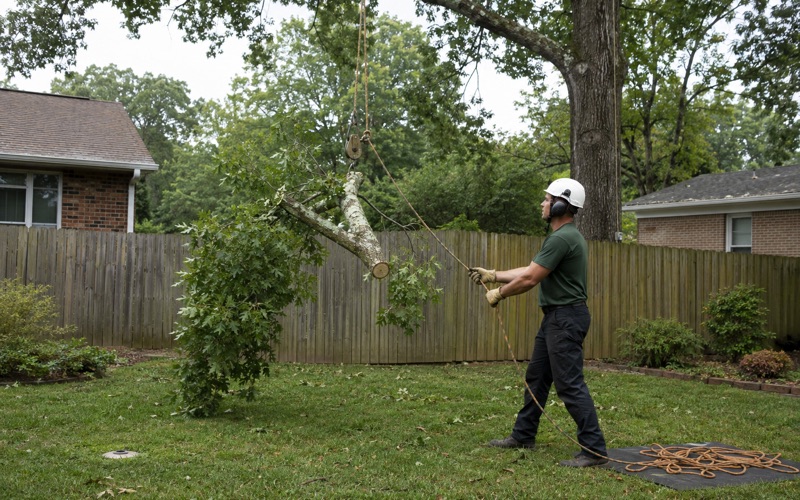
Hendersonville TN Tree Removal has handled tree removal in Smyrna for more than 20 years, and the first thing our crew reads on a Smyrna property is not the tree — it is the ground the tree is standing in. On this side of Middle Tennessee the same trunk diameter can mean two very different jobs, depending on how much soil sits between the roots and the rock underneath them.
We quote the whole job in writing before anything starts: the takedown, the brush, the trunk rounds, the stump and the grindings that come out of it. Nothing a contractor cuts gets collected at the curb, so a price that stops at the felling is not really a price.
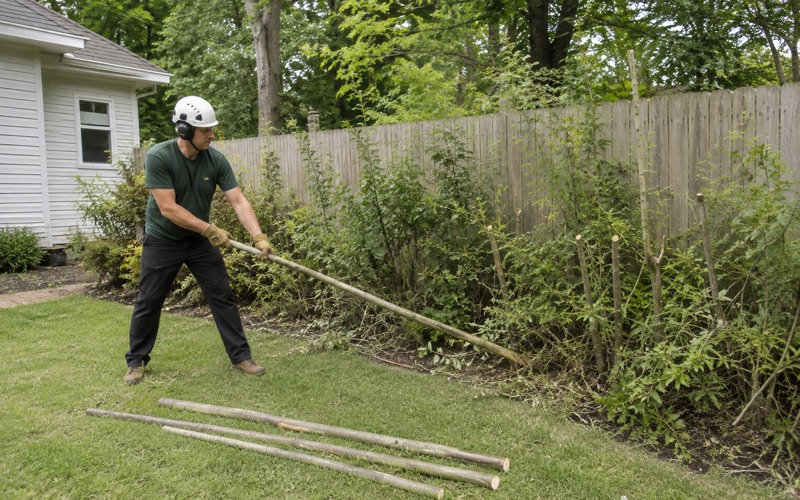
Access gets measured before the work is priced, not after — gate width, the carry distance back to the truck, and whether a chipper can reach the tree at all or whether the wood has to come out by hand. That half hour on the lot is the difference between an estimate that holds and one that changes on the morning of the job.
Why a Smyrna tree comes over whole instead of breaking
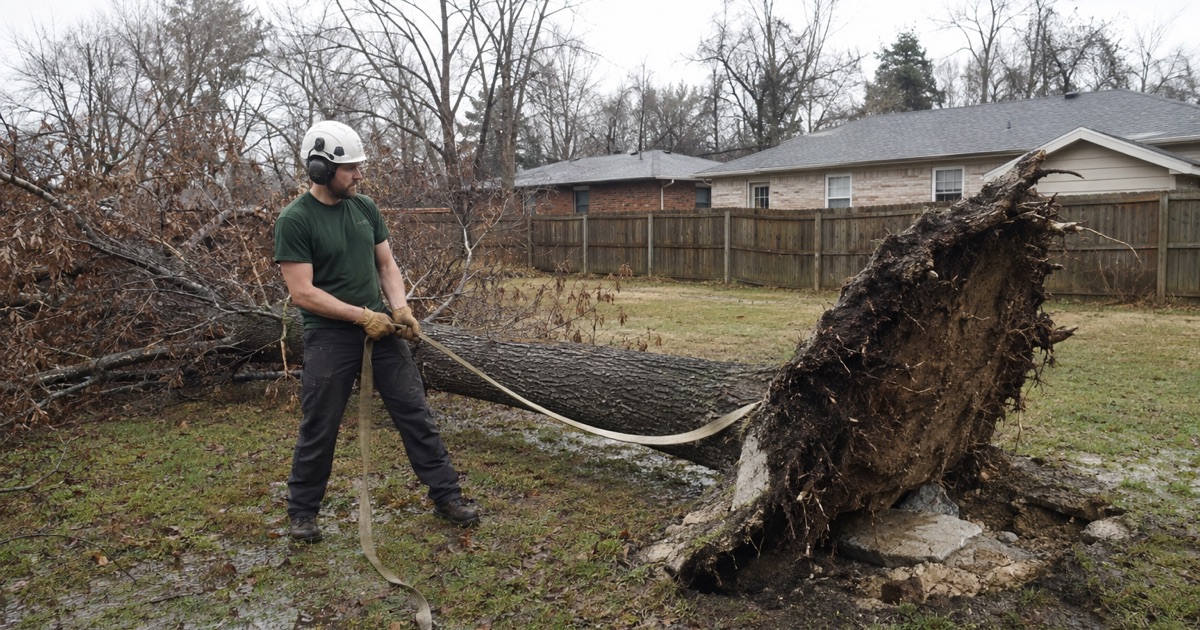
Smyrna sits in the Inner Nashville Basin, EPA Level IV ecoregion 71i, on flat-lying Ordovician limestone. The soils formed on clayey residuum weathered from that limestone, and they are shallow in a way that changes how a tree fails rather than just how it grows.
Eight to twenty inches to rock
The Barfield series, whose type location is in Rutherford County, runs 8 to 20 inches to limestone bedrock. The Gladeville series is thinner still, roughly 3 to 12 inches, formed in weathered thin-bedded flaggy limestone. Neither is an oddity here, and both put a hard floor under every root system on the lot.
A wide, thin root plate
Because rooting depth is capped by rock, a mature tree on these soils spreads a wide but thin root plate instead of a deep one. In saturated ground the failure that follows is not a trunk snapping at head height; it is the entire tree levering over, with the plate lifting a disc of turf on the windward side.
That distinction drives what we recommend. A trunk or union defect can sometimes be answered with a reduction cut or a tree support system, such as dynamic cabling on a co-dominant stem with included bark. A root plate with no depth beneath it cannot be cabled back into the ground, and on that tree the honest recommendation is removal.
Reading the root collar, not just the canopy
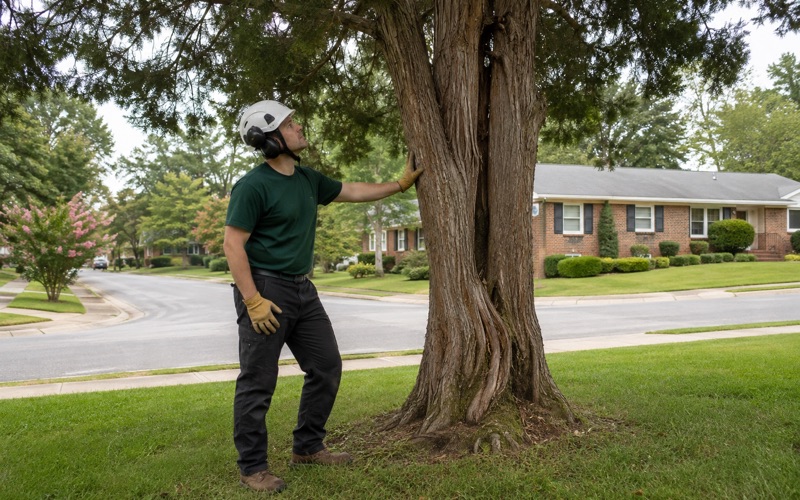
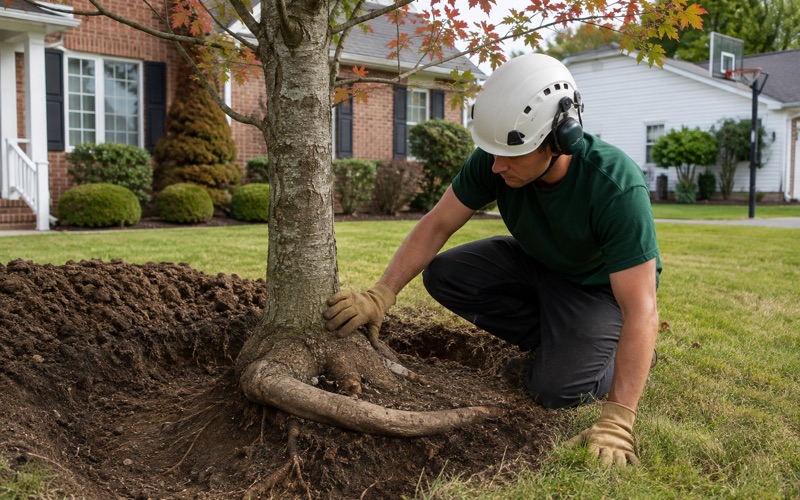
We look at the flare before we look at the crown. A conk at the root flare, soil or mulch piled over the collar, or a turf line already cracked on one side tells us more about how the tree will do in a February storm than anything happening 40 feet up. Where the flare is buried, a root collar excavation with an air spade shows what is actually down there instead of what we are guessing at.
Looking for tree-removal closer to Ashland City? See Tree-Removal in Ashland City.
The wettest ground and the heaviest ice arrive in the same months
The USDA Forest Service biophysical setting model for the Nashville Basin Limestone Glade and Woodland system records that these thin soils dry out through summer and autumn and become saturated in winter and spring. The same model names periodic drought, fire, historic grazing and ice storms as the disturbances that restrict woody growth in this system.
Put those two lines together and the local problem states itself. The months when the ground grips a root plate least firmly are the same months when ice is loading the canopy, and ice here is a documented agent of structural damage rather than seasonal color borrowed from somewhere else. That published pattern describes the system as a whole, not a moisture reading taken on your lot in a particular week.
What January 2026 showed
For the January 24-28, 2026 storm, the National Weather Service office in Nashville recorded 2.1 inches of snow, 0.3 inches of freezing rain and temperatures as low as minus 4 degrees for Rutherford County. Those are observations from a single event rather than long-run normals, and we read them that way.
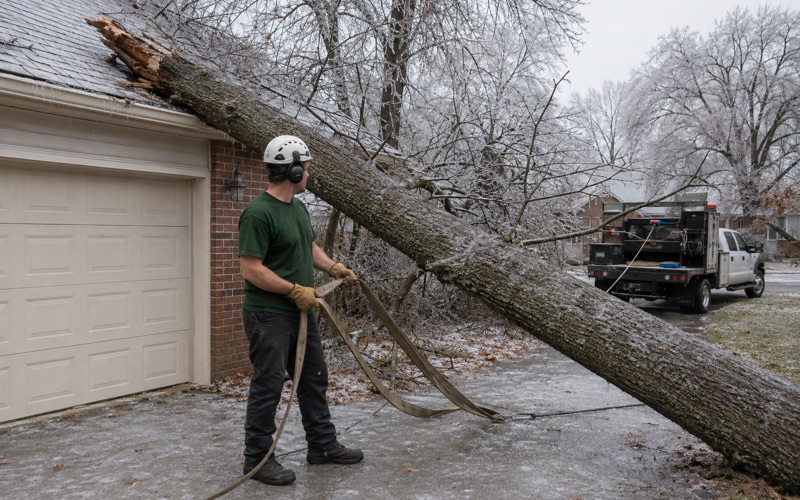
Middle Tennessee Electric’s president and chief executive, Chris Jones, called the restoration that followed one of the most significant challenges in the cooperative’s 90-year history, and described crews finishing a repair only to watch more trees fall onto the same lines as they drove away. Trees coming down late in a week like that are usually not newly loaded. They are trees whose plates had already let go.
Getting ahead of the winter on a tree that already leans
If a tree leaned during a wet spring and never straightened, that is a winter problem you can see in July. We would rather take it down on a dry day with mats under the equipment than pull it off a roof in freezing rain.
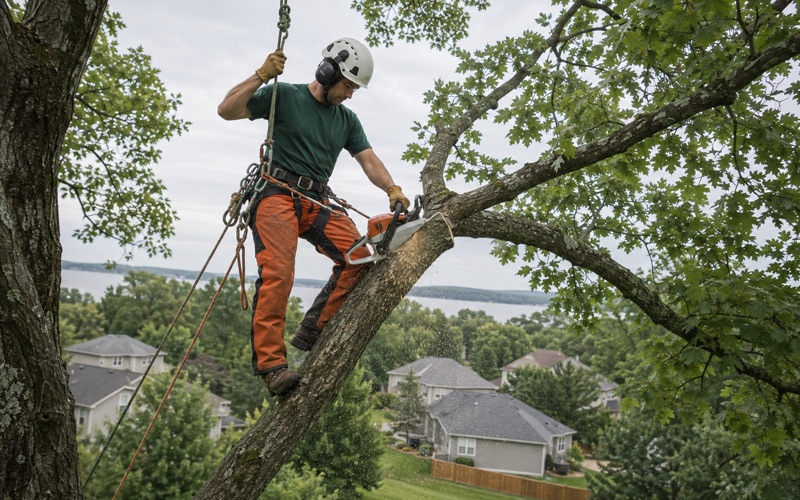
We also write the hazard assessment down, so a homeowner has something to put in front of a neighbor, an HOA board or an insurance adjuster instead of an opinion. And we stop for weather the way ANSI Z133 requires: we will make a scene safe from the ground during an ice event, but we do not promise a climber in a loaded canopy.
Post oak, chinkapin oak and redcedar: a glade canopy
The natural woody vegetation of this ecoregion is dominated by post oak, chinkapin oak and eastern redcedar, with redbud, winged elm and blue ash as the associated woody plants. On the Barfield soils, roughly half the area still holds original hardwoods, chiefly oak, hickory, red cedar, elm, maple and redbud.
What that changes about a takedown
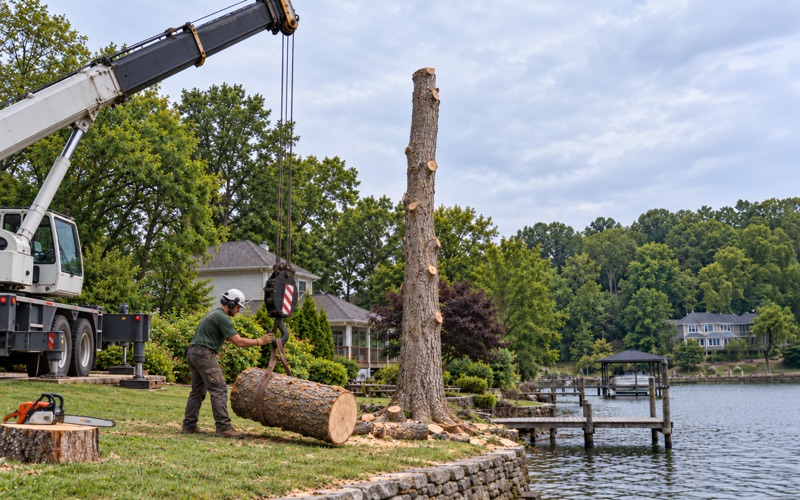
Eastern redcedar carries dense, heavy wood and a good deal of interior deadwood, and green log weight is what a rigging block and a lowering device actually have to hold. We size the rigging to the piece being cut and to the working load limit of the gear, which over a driveway usually means smaller pieces than the tree looks like it needs.
Post oak and chinkapin oak on shallow glade soil grow slower and stay shorter than the same species on deeper ground. Diameter at breast height tells us the load we are handling; it does not tell us the tree’s age, and it does not tell us how much of the root plate is still working.
Remnant trees in newer neighborhoods
Only 7.4 percent of the town’s 21,051 housing units predate 1960, and the median build band is 2000-2009, with 61.1 percent single-family detached and 57.4 percent of occupied units owner-occupied. Most of what we take down here is therefore one of two things: a remnant tree left standing when the subdivision went in, or landscape stock planted about 20 years ago.
The remnants are the ones that need the closer look. A tree that spent decades in open woodland and then had a lawn, a driveway and an irrigation line built around it is holding on with a root plate shaped for conditions that no longer exist, and a flush of epicormic sprouts along the trunk is often the first sign it has noticed.
Grinding a stump when the rock is closer than the blade
Depth below grade is a site answer
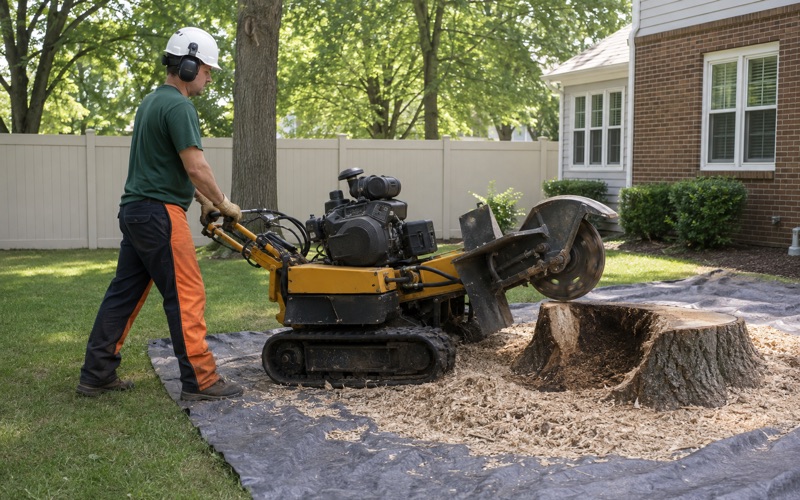
A stump grinder rated to cut 12 to 16 inches below grade will reach limestone on a Barfield or Gladeville soil before it reaches the bottom of the root plate. Grind depth here is limited by the rock and not by the machine, which is why we will not put a below-grade number on a Smyrna stump before someone has stood on the lot.
What we do quote, once we have seen it, is the stump by diameter and by depth below grade, with the grindings and the backfill settled in the same estimate. A homeowner planning to replant in that hole should hear the depth answer before the grinder arrives rather than after.
Equipment sized to the access, not to the stump
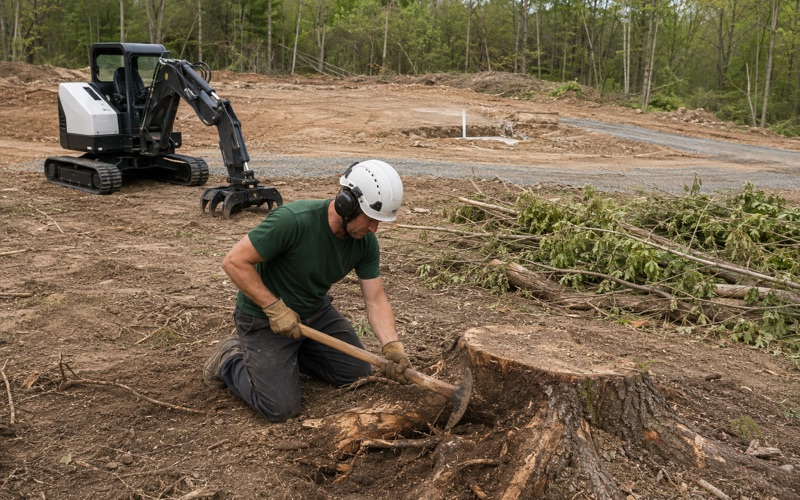
Where the gate is narrow or the turf matters, we bring a narrow-access stump grinder and a mini skid steer through instead of walking a full-size machine across the lawn. Property protection mats go down along whatever route the equipment travels. Access is the measurement that decides which of those we bring, which is the reason we take it before the price.
The calls that come before the blade
Middle Tennessee Electric clears a right of way 40 feet wide, 20 feet on each side of the line, and its crews cut back or eventually remove what grows into it. Where a line is involved in a storm-damaged tree, the utility is called first and we work behind them.
Stump grinding and root excavation count as digging, so a Notice of Intent to Excavate goes to Tennessee 811 before the teeth turn. Underground equipment carries its own clearances — the utility’s no-grow zone keeps landscaping 12 feet off the front of a transformer and 3 feet from every other side — and those are far easier to respect than to repair.
Who signs off in Smyrna
Smyrna imposes no permit and no diameter threshold for taking down an existing tree on private property. It is also legally a town, governed by a Town Council with a Town Planner, so anyone quoting you a city council rule for removing a tree here is reading about somewhere else.
Tennessee issues no trade-specific tree care or arborist license either, which means the credentials worth asking about are the voluntary ones: an ISA Certified Arborist on the crew, a Tree Risk Assessment Qualification behind the hazard write-up, and pruning done to ANSI A300 standards on the trees that stay. Ask for the whole job in writing, ask what the price does when the chipper cannot reach the tree, and ask where the grindings end up. Those three answers tell you most of what you need to know about a quote.
- 20+ Years in Middle Tennessee
- Free Written Estimates
- Emergency Storm Response